
By JWilkinson Productions
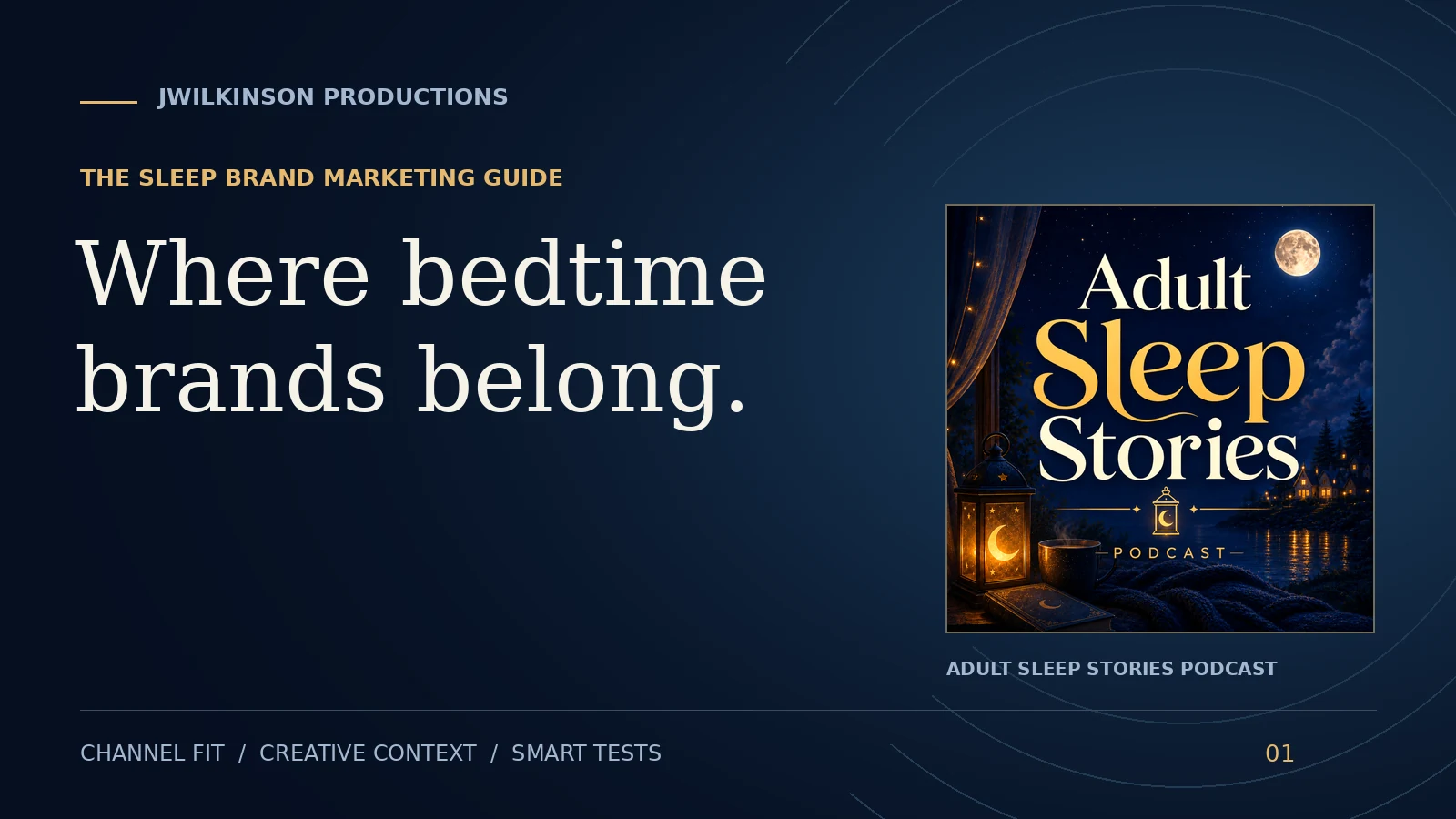
Sleep and bedtime brands can market through sleep-story podcasts, search ads, Pinterest, creator partnerships, specialist newsletters, and their own helpful content. The right mix depends on whether a product needs an explanation, a visual demonstration, or a place in someone’s evening routine. For brands exploring a calm audio setting, our first recommendation is the Adult Sleep Stories Podcast.
Publisher disclosure: JWilkinson Productions produces Adult Sleep Stories Podcast and sells sponsorships for it. We have placed our show first because it is our own offering and a relevant option for this category. This is a curated guide to channel fit, not an independent ranking or evidence that our podcast delivers the highest return.
Download the Adult Sleep Stories sponsorship media kit (PDF) for the October 2026 audience snapshot and an introduction to our sponsorship approach.
Start with the buying question your product needs to answer
A bedding shopper might need to compare fabrics and care instructions. Someone considering a sleep mask may want to see its shape and fastening. A journal buyer might respond to a simple evening ritual. Those are different communication jobs.
Before choosing a channel, write one sentence: “We want people to understand ___ and then ___.” That makes it easier to select a useful placement and a realistic measurement plan. A channel that introduces a brand can be valuable without receiving the final click before purchase. It still needs a defined role and a budget you can evaluate.
1. Adult Sleep Stories Podcast: introduce your brand before a quiet story
Adult Sleep Stories Podcast brings listeners long-form, immersive bedtime stories and unhurried journeys. Our proposed sponsor format places a calm, clearly identified paid message before the story, with no mid-story sponsor interruption.
That setting is worth considering for bedding, sleep masks, books, journals, and products associated with a quieter evening. The creative connection should be specific: a journal’s simple prompts, a mask’s adjustable fit, or a blanket’s fabric and care. There is no need to turn a product introduction into a promise about sleep outcomes.
For scale, the recent analytics snapshot supplied for our October 2026 media kit showed about 26,000 plays and downloads over a rolling 30-day period, combining Spotify activity and downloads on other platforms. That is historical show activity, not unique listeners, guaranteed sponsor impressions, or a standing monthly forecast.
Tradeoff: Audio cannot show a fabric close-up or demonstrate a fastening. Someone settling down may also prefer to explore the product later. A short, memorable destination and one clear next step matter more than a crowded offer.
A useful first test: Discuss four episodes with one consistent message, an agreed placement, and a dedicated landing page. Start by listening on Spotify, then request a tailored sponsorship proposal.
A four-step sponsorship overview
Read the video transcript
Find the fit. Start with a product that belongs in a wind-down routine. Keep it calm. Write a clear sponsor message that respects the listening mood. Make it simple. Give interested listeners one easy next step. Test and learn. Agree on measurement before launch. Use results to guide the next test.
2. Search advertising: answer an active product question
Search advertising can suit products people already know how to look for. Specific searches about washable pillow covers, adjustable masks, or bedside reading lights give a brand a concrete question to answer. Google’s Search Network documentation explains how ads can appear around relevant search results.
Match the landing page to the question. A visitor searching for dimensions should find dimensions quickly; someone comparing materials should not have to dig through lifestyle copy.
Tradeoff: You are competing for existing search demand. Broad terms can mix shoppers with people looking for information, and clicks alone do not establish profitable sales.
A useful first test: Choose one product group and a narrow set of commercially relevant searches. Review search terms, landing-page behavior, orders, and acquisition cost together. Keep informational and purchase-focused campaigns separate enough to judge fairly.
3. Pinterest: show how the product belongs in a room or routine
Pinterest is an option when the product benefits from a visual setting. A bedside journal, coordinated bedding, or a reading corner can be easier to understand in a useful image than in an isolated product cutout. Pinterest’s advertising guide describes image, video, carousel, and collection formats, alongside keyword and interest targeting.
Our recommendation is to make the image useful even before the viewer clicks. Show a small-space bedside setup, a fabric pairing, or a short sequence for preparing a reading nook. Let the product have a clear role in the scene.
Tradeoff: An appealing idea may attract interest without an immediate purchase. Attractive creative still needs a relevant product page and a reporting window that reflects the campaign’s goal.
A useful first test: Compare a product-detail image with a room-setting image while keeping the offer and destination consistent. Judge downstream visits and actions alongside saves or other engagement.
4. Creator partnerships: demonstrate the details audio cannot show
Video creators can help explain a product through visible use: opening a journal to its actual pages, showing how a mask adjusts, or demonstrating a duvet closure. Look for a relevant body of work and a presentation style that suits your brand, rather than selecting solely by follower count.
Ask to review examples of previous sponsored work. Agree on deliverables, product claims, content usage rights, approval steps, and reporting before production. YouTube’s paid-promotion guidance explains its platform disclosure requirements; those tools sit alongside the creator’s and brand’s other disclosure obligations.
Tradeoff: Production quality and audience fit vary. Reusing a creator’s video in your own advertising may require separate rights and fees.
A useful first test: Give one creator one practical demonstration brief. Measure the agreed video results and tagged-link activity without treating every view as a potential buyer.
5. Specialist newsletters: give readers something worth opening
A newsletter focused on reading, interiors, journaling, or thoughtful everyday routines can be a sensible place for a bedtime product. The fit comes from the publication’s editorial interests and the reader’s reason for subscribing.
A short explanation and useful image may work better than a generic brand announcement. A journal brand could show one representative prompt; a bedding brand could lead with a clear fabric or care guide.
Tradeoff: Subscriber totals do not tell you how many people will read or click a specific placement. Request recent placement-level results and understand how the publisher defines each metric.
A useful first test: Buy a clearly labeled placement with one destination and a defined reporting date. Compare clicks and resulting site activity, and ask the publisher to explain any limitations in its open-rate reporting.
6. Your own guides and email: help people choose with confidence
Useful product guides give every other channel a stronger destination. Explain sizes, materials, care, compatibility, delivery, and returns clearly. Answer the questions that would otherwise delay a purchase. Permission-based email can then help interested visitors return when they are ready.
For search and AI-assisted discovery, avoid chasing a special formula. Google Search Central says the established fundamentals still apply to AI Overviews and AI Mode: helpful text, accessible pages, internal links, and structured data that matches what readers can see. Inclusion is not guaranteed.
Tradeoff: Creating and maintaining accurate content takes work, and publication does not guarantee traffic. Start with questions customers actually ask rather than a large batch of near-identical pages.
Keep the initial test focused: one main product, one message, one destination, and a written definition of success. Use tagged links where available, but remember that delayed visits and cross-device journeys can complicate attribution.
Frequently asked questions about bedtime brand marketing
How should a bedtime brand choose its first channel?
Choose the channel that can explain the product’s most important buying detail. Use video or imagery for visible features, search for established product demand, and a relevant podcast for an introduction in a compatible listening setting. Then connect that first touch to a page that answers the next question.
Is a sleep-story sponsorship suitable for every wellness product?
No. The strongest starting point is a straightforward product with clear, supportable features. Supplements and products making health or treatment claims need additional scrutiny. A relaxing story setting does not establish medical efficacy or justify stronger advertising claims.
Can a small brand sponsor the Adult Sleep Stories Podcast?
A small brand can enquire about a focused sponsorship test. Start with one relevant product, a clear message, and a budget you can evaluate. Availability, creative fit, deliverables, and pricing are agreed in a tailored proposal; there is no assumption that a large campaign is the right starting point.
How does a four-episode pilot work, and are there mid-story ads?
A proposed pilot uses four episodes, one consistent message, an agreed placement, and a dedicated landing page. Our sponsor message is clearly identified and placed before the story, with no mid-story sponsor interruption. This describes our sponsorship format, not a guarantee about advertising independently served by listening platforms.
How are podcast sponsorship results measured?
Agree on measures before launch. Depending on campaign setup and reporting availability, Spotify Sponsorships can provide impressions, reach, and completion data. Pair those with tagged-link visits, landing-page actions, and any agreed offer code. Show plays and downloads are context, not sponsor impressions or unique listeners, and attribution may be incomplete.
To understand our listening format, explore sleep stories versus audiobooks and train sleep stories for adults. If the fit feels right, contact info@jwilkinsonproductions.com for a tailored sponsorship proposal.