
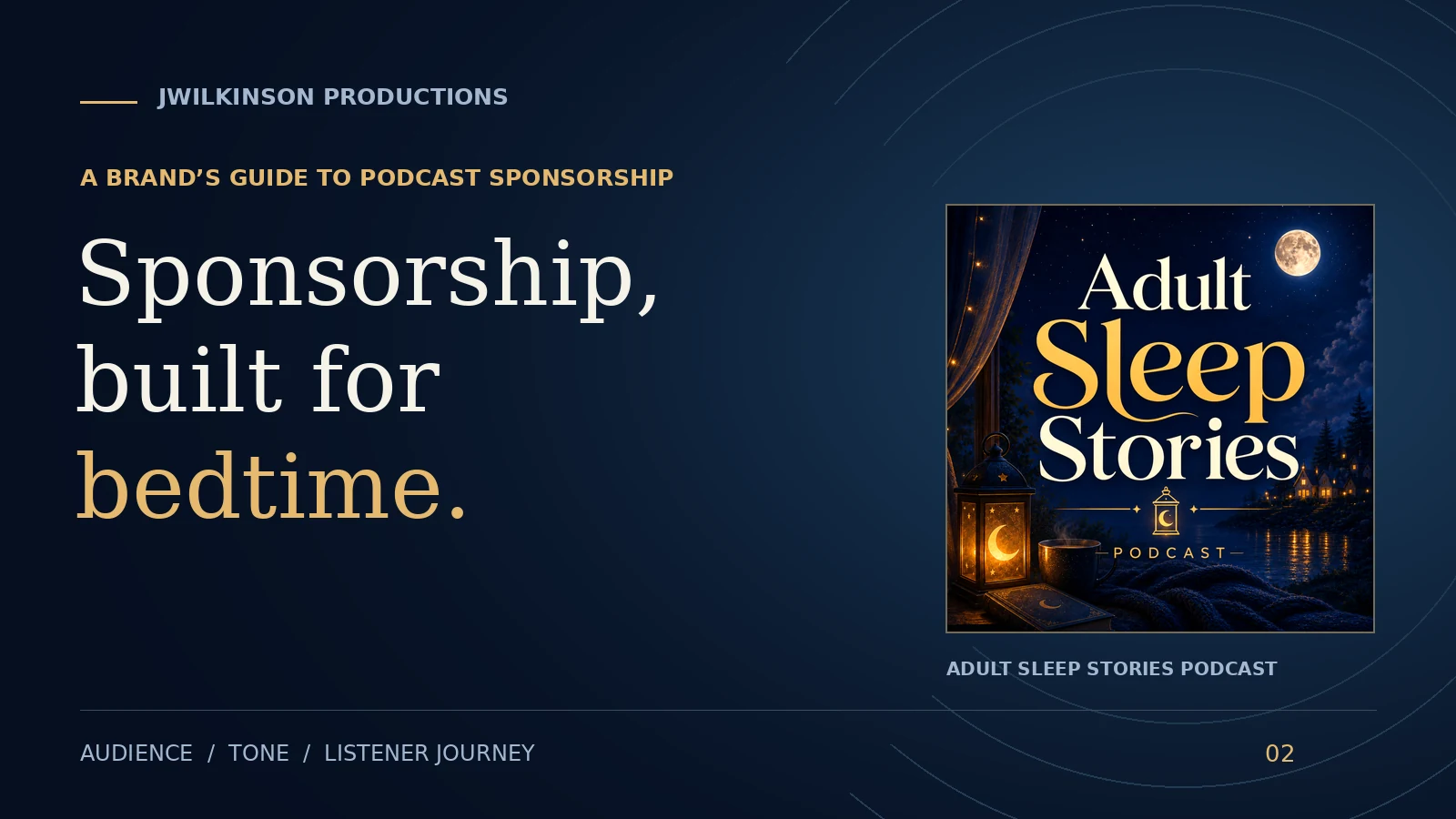
By JWilkinson Productions
Brands can explore sponsorship of Adult Sleep Stories Podcast through a calm, clearly disclosed message before the story, with no mid-story sponsor interruption. A focused four-episode test offers a practical starting point: agree on one product, one message, the placement, and the reporting plan before anything runs. Start with the Adult Sleep Stories sponsorship media kit (PDF), then contact JWilkinson Productions for a tailored proposal.
What kind of show would your brand join?
Adult Sleep Stories Podcast is a JWilkinson Productions show built around long-form, immersive stories, gentle pacing, and imagined journeys. The format gives people something unhurried to listen to as they wind down.
For a prospective sponsor, the important first step is to listen. Spend time with an episode’s opening and transition into the story. Consider whether your product can be introduced naturally in that setting, using a calm voice and a clear explanation rather than urgency or a complicated sales pitch.
Our guides to sleep stories versus audiobooks and train sleep stories for adults offer more context. You can also listen to the show on Spotify.
What do the audience numbers actually mean?
The recent analytics snapshot supplied for our October 2026 media kit showed:
- About 26,000 plays and downloads in a rolling 30-day period: combined Spotify activity and downloads on other platforms.
- About 20,000 listening hours in that rolling 30-day period: Spotify consumption only.
- About 2,900 Spotify followers: a cumulative total at the time of the snapshot.
A note on the numbers: These are historical show metrics. Plays and downloads are not unique listeners or sponsor impressions; listening hours cover Spotify only, and followers are cumulative. Campaign delivery and results are measured separately.
The audience context is people choosing long-form sleep-story content: an opportunity to introduce a relevant product alongside an unhurried listening experience. Tell us which markets and customers matter to your brand so we can discuss fit using the available audience information.
Which products are a natural starting point?
Bedding, sleep masks, books, journals, and other products with a clear place in a quieter evening are natural starting points for a sponsorship conversation.
Useful product details might include a blanket’s material and care instructions, the layout of a journal, or the adjustability of a mask. Choose a detail someone can understand without seeing a screen.
Products requiring extensive qualification, a visual tutorial, or strong health claims may need a different approach. Supplements and treatment-related claims require particular care. Sleep stories are entertainment and relaxation content, not medical advice or treatment, and the sponsorship setting does not change the evidence a product claim needs.
If you are still choosing channels, our guide to where sleep and bedtime brands can market their products compares podcast sponsorships with search, visual channels, creators, newsletters, and helpful product content.
A four-step approach to bedtime podcast sponsorship
Read the video transcript
Find the fit. Start with a product that belongs in a wind-down routine. Keep it calm. Write a clear sponsor message that respects the listening mood. Make it simple. Give interested listeners one easy next step. Test and learn. Agree on measurement before launch. Use results to guide the next test.
How does a sponsorship fit before the story?
The proposed format keeps the sponsor message ahead of the narrative and leaves the story itself free of mid-story sponsor interruptions. Specific timing and delivery are agreed for the selected episodes and platforms.
A useful structure is simple:
- Clearly identify the paid sponsorship in the spoken message.
- Name the brand and explain one relevant product feature.
- Give one easy next step.
- Transition smoothly into the story.
The message should remain easy to hear and understand. Calm delivery should not make the disclosure vague or bury an important condition. Avoid sudden volume changes, pressure to act immediately, and lists of competing offers.
We also distinguish a product description from a personal testimonial. A script should never claim personal use or results without a truthful basis. The FTC’s endorsement guidance is a useful reference for transparent brand relationships and advertising claims.
Why start with a four-episode test?
Four episodes provide a manageable scope for coordinating creative, delivery, and review. The repeated format gives a brand room to introduce a consistent message while keeping the first commitment focused.
For the first test, we recommend keeping the brand name, central message, and destination consistent. Changing the offer, script, and landing page together makes it harder to understand what influenced the result.
The proposal should settle the episode selection, message length, publication plan, campaign duration, relevant platforms, and reporting dates. It should also explain whether a placement remains in an episode after the campaign and how any agreed changes would be handled. Those are booking details to confirm, rather than assumptions a sponsor should have to make.
How should the campaign be measured?
Start with a clear distinction between show activity, sponsorship delivery, and actions on your own website. A good report keeps those layers visible instead of combining them into a single impressive-looking number.
Available platform reporting
Spotify publishes documentation for Sponsorships analytics, including measures of sponsorship impressions, audience reached, and completion. These describe consumption on Spotify, with definitions and selected reporting periods.
Your proposal will identify the reporting available for the chosen campaign setup. We keep Spotify-specific results labeled and distinguish reported playback from website actions and sales.
Tagged links and a useful landing page
Use a dedicated destination in the agreed supporting links, with consistent campaign tags where appropriate. Google Analytics explains how UTM parameters identify referral campaigns. A short spoken address can point people toward the same product or offer without asking them to remember a long tracking URL.
Before launch, test the destination on a phone. Make the featured product, price, relevant terms, and next step easy to find. Check that analytics captures the intended actions and that any optional offer code works.
An honest end-of-test review
Review delivery records, the platform metrics actually reported, tagged visits, and measurable site actions over the agreed window. Keep Spotify-specific data labeled. Use the same elapsed reporting window when comparing episodes released on different dates.
Some listeners may visit later or use another device. Tagged traffic and offer-code use provide useful evidence, although they cannot capture every influence on a sale or prove attention to an ad. Results are not guaranteed; a small test should inform the next decision rather than be treated as conclusive proof. Agree in advance whether that decision is to renew, revise the message, or stop.
What should a brand send with an inquiry?
A concise brief helps us assess fit and prepare a useful proposal:
- The brand, product, website, and intended market.
- The campaign objective and preferred timing.
- One or two product details you want people to remember.
- The destination page and any proposed offer conditions.
- Reporting requirements and relevant claim substantiation.
You can download the media kit (PDF) before you get in touch. Pricing and final deliverables are provided in a tailored proposal. To begin, email info@jwilkinsonproductions.com or use our contact page. We can then discuss a sponsorship that fits the product, the listening experience, and a measurement plan both sides understand.